Failed Vision Screenings & Blurred Vision in Children

What a Failed Vision Screening Is Really Telling You
A failed vision screening at school, work, or a routine checkup can feel alarming — or easy to dismiss. Many people walk away thinking they simply need glasses and never follow up with a proper eye exam. But a vision screening is not a diagnosis. It's a signal. And when that signal says something is off, the next step matters more than most people realize. At Columbia Eye Associates, we help patients of all ages understand what's behind their blurred vision and get the answers they deserve.
Screenings vs. Comprehensive Eye Exams
Vision screenings are limited by design. They typically test basic visual acuity — whether you can read letters at a set distance — and little else. They don't assess eye health, check for disease, evaluate how the eyes work together, or examine the internal structures of the eye. A child who passes a screening may still have significant vision problems. And an adult who fails one may have a condition that goes far deeper than needing a new prescription.
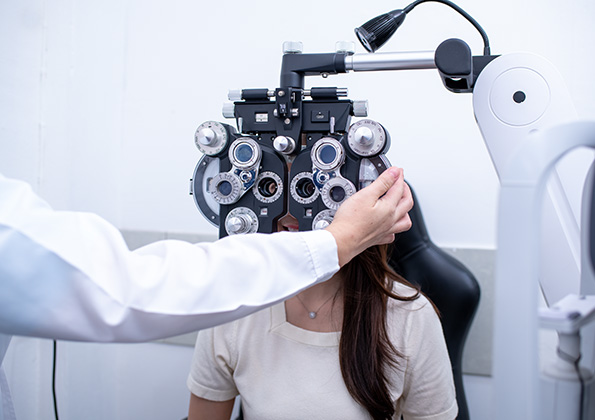
A comprehensive eye exam, by contrast, evaluates the full picture. It checks visual acuity at multiple distances, tests peripheral vision, assesses eye coordination and focusing ability, and examines the health of the retina, optic nerve, and surrounding structures. It's the difference between a snapshot and a complete medical evaluation.
What Causes Blurred Vision?
Blurred vision is one of the most common complaints we hear — and one of the most misunderstood. The majority of cases are caused by refractive errors: nearsightedness, farsightedness, or astigmatism. These conditions occur when the shape of the eye prevents light from landing precisely on the retina, making images appear out of focus. They're easily corrected with the right prescription for glasses or contact lenses.
However, blurred vision can also be a symptom of more serious underlying conditions. Amblyopia (lazy eye), cataracts, glaucoma, diabetic retinopathy, and macular degeneration can all cause changes in visual clarity. In some cases, blurred vision may even be connected to neurological issues or increased pressure within the skull. This is why a failed screening should always prompt a thorough evaluation — not just a trip to pick out frames.

Why Children Are Especially Vulnerable
Children rarely complain about vision problems because they assume everyone sees the way they do. An undetected vision issue can affect reading, learning, social development, and physical coordination. Studies consistently show that vision problems are among the leading undiagnosed contributors to academic struggles in school-age children. Early intervention — ideally before age six — dramatically improves outcomes for conditions like amblyopia.
Don't Wait on a Warning Sign
Whether it's a failed school screening, new difficulty reading street signs, or blurred vision that's been quietly building for months, these are signs worth taking seriously. At Columbia Eye Associates, we provide thorough, personalized evaluations to find the root cause and develop a treatment plan that works.
Schedule your comprehensive eye exam today — because clear vision starts with a complete picture.